



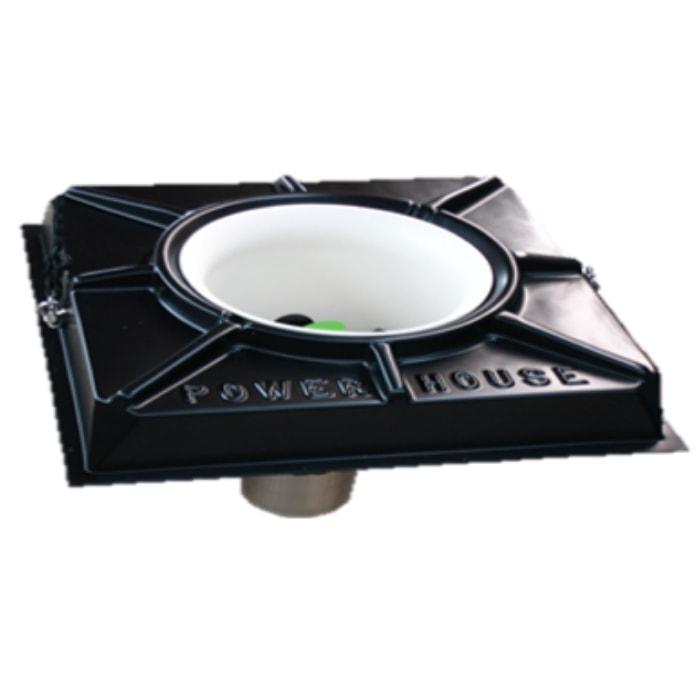



Power House Surface Aerators
$1,325.00 - $2,725.00
Order in the next to get it by


Order with confidence — every product includes free shipping, lowest-price protection, and a hassle-free money-back guarantee. No risk. No surprises.
Airmax Power House Surface Aerator
High-volume surface aeration built for real oxygen recovery, aggressive circulation, and continuous-duty performance. Formerly known as Power House & Bearon Aquatics Surface Aerators — now manufactured and supported by Airmax. Learn more about our surface aerator oxygen transfer performance and detailed continuous duty pond aerator specs .
If you’re trying to reduce fish-kill risk, recover dissolved oxygen fast, or move serious water in warm months, this is the “get-it-done” style of aeration.
Prefer email? service@splashymcfun.com
Why Choose a Power House Surface Aerator?
Performance & Build (Green Checks)
- ✓High-torque, continuous-duty motor designed for demanding use
- ✓Heavy-duty float platform built for stability and long life
- ✓Industrial-grade intake/shroud for high pumping volume
- ✓Rapid oxygen recovery when ponds are stressed (heat + low DO)
- ✓Built for demanding summer conditions and heavy organic load
Outcome Benefits (Blue Checks)
- ✓Ideal for fish health and DO stabilization
- ✓Aggressive circulation to reduce stagnation
- ✓Helps prevent oxygen crashes during peak summer stress
- ✓Proven performance for HOA / golf / municipal applications
- ✓High pumping volume for faster mixing & degassing
Quick Specs (Bullets)
- Models: F250, F500, F750DP, F1000DP
- Power: 115V or 230V (each HP)
- Warranty: 2-Year
- Flow rates: see Specifications
- Need help picking? Ask us to size it
How Surface Aeration Works
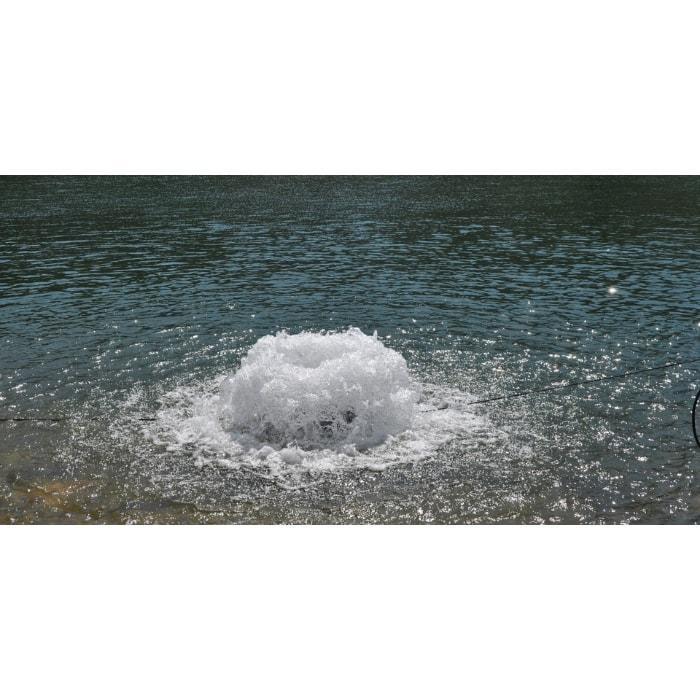
A Power House surface aerator pulls water through the shroud and forces it above the surface, creating aggressive mixing and a large air-to-water exchange zone. This helps strip undesirable gases, circulate oxygenated water, and reduce stagnant conditions.
What You Get
- ✓Fast oxygen recovery in warm-weather stress
- ✓Whole-pond mixing to reduce dead zones
- ✓Improved water quality through stronger circulation
Best Use Cases
- ✓Summer oxygen crashes / fish-kill prevention
- ✓High nutrient / high biomass ponds
- ✓When you need results quickly
Compare Aeration Types
See our surface aerator vs aerating fountain comparison to determine which system matches your pond goals.
If you’re not sure whether you need surface aeration, fountains, or diffused aeration, we’ll help you pick the right system for your pond and goals.
Oxygen transfer performance depends on flow rate (GPM), agitation pattern, and pond depth. The Power House lineup ranges from approximately 300 GPM (F250, 1/4 Hp) up to 1150 GPM (F1000DP, 1Hp). Higher GPM output increases surface agitation and circulation volume, improving oxygen transfer efficiency during peak summer heat stress.
Low dissolved oxygen (DO) levels most commonly occur during hot summer months when water temperatures rise and oxygen solubility decreases. Heavy algae blooms, decaying organic matter, high fish biomass, and stagnant circulation can further accelerate oxygen depletion. Overnight respiration from algae and aquatic plants can cause early-morning oxygen crashes that lead to fish stress or fish kills. In retention ponds and HOA lakes with nutrient runoff, these oxygen swings can be severe without active mechanical aeration.
Surface Aerator Oxygen Transfer Performance Explained
Surface aerator oxygen transfer performance is driven by mechanical agitation and circulation volume. Unlike decorative fountains, high-volume surface aerators move large quantities of water (measured in GPM), creating sustained air-to-water exchange across the surface. This continuous mixing increases dissolved oxygen levels, reduces stratification, and improves overall pond stability during peak thermal stress.
In practical terms, higher GPM output increases both oxygen diffusion and circulation radius. That means faster recovery after oxygen crashes and more consistent DO levels across the entire pond basin, especially in systems over one acre or with moderate to heavy fish biomass.
Built for Demanding Applications
These aren’t decorative “ripples.” Power House aerators are built to move serious water in environments where oxygen levels and circulation can’t be left to chance.
Ideal For
- ✓HOAs & community lakes
- ✓Golf courses and water hazards
- ✓Municipal ponds & public water features
- ✓Retention ponds with heavy nutrient runoff
- ✓Fishery / aquaculture oxygen support
Why It Matters
- ✓24/7 capable continuous-duty design
- ✓Fast DO recovery when water temps spike
- ✓Stronger mixing reduces stagnation zones
- ✓Commercial-grade build for real-world abuse
Want us to size it based on acreage + depth + fish load? Contact us.
Horsepower Sizing Guide
We carry the full Power House surface aerator lineup: F250 (1/4 HP), F500 (1/2 HP), F750DP (3/4 HP), F1000DP (1 HP) — each available in 115V or 230V.
Quick Rule of Thumb
- ✓F250 (1/4 HP) — small ponds / targeted circulation
- ✓F500 (1/2 HP) — up to ~1 acre typical loads
- ✓F750DP (3/4 HP) — 1–2 acres or heavier load
- ✓F1000DP (1 HP) — larger ponds / higher biomass
Sizing Factors (We Use These)
- •Pond acreage + shape
- •Average & max depth
- •Fish stocking density
- •Organic load / nutrient runoff / algae pressure
For example, a 1-acre pond averaging 6–8 feet deep with moderate fish stocking may benefit from a 1/2 HP (F500) unit delivering approximately 884 GPM of flow. Larger ponds in the 1–2 acre range with higher biomass or significant runoff may require a 3/4 HP (F750DP) or 1 HP (F1000DP), moving 1050–1150 GPM. Higher GPM output increases surface agitation and circulation volume, improving oxygen transfer efficiency during peak heat stress.
Minimum Operating Depth: Power House surface aerators require sufficient depth to float freely and avoid bottom disturbance. As a general rule, ponds should provide at least 24–30 inches of water depth at the installation point. Ultra-shallow basins may require repositioning or a different aeration strategy.
Electrical Requirements & Operating Cost
Power Options
- ✓Available in 115V or 230V for each horsepower
- ✓Use a properly grounded GFCI protected circuit
- ✓One unit per dedicated outlet is recommended
If you’re unsure on voltage, breaker sizing, or cable run length, we’ll help.
Cost-Control Tip
Many buyers run aeration continuously during peak heat and then use a timer / DO meter strategy to reduce runtime while maintaining water quality.
Want an estimated monthly cost-to-run based on your model + local electricity rate? Ask us.
Installation & Anchoring
Straightforward setup. The unit is designed to be installed and secured quickly with mooring lines and a proper power connection.
Quick Setup Steps
- 1Inspect shipment upon delivery for visible damage
- 2Route power cord properly through the float top
- 3Secure mooring lines to two stable anchor points
- 4Ensure adequate depth so the unit floats freely
- 5Connect to a properly grounded GFCI protected circuit
Safety & Cable Notes
- !Do not run out of water. Unit must be submerged.
- !Remove below freezing. Discontinue use when water is below 32°F.
- ✓Extension cord sizing matters for voltage drop — ask us if you have a long run
Engineered for Long-Term Reliability
This is where Power House separates from lightweight “pond gadgets.” It’s built like equipment — because it is equipment.
Reliability Features (Checks)
- ✓Oil-cooled sealed motor design
- ✓Continuous-duty rated performance
- ✓Thermal overload protection built in
- ✓Carbon ceramic mechanical seal for durability
Built Materials (Checks)
- ✓Series 300 stainless housing construction
- ✓Magnesium bronze end bell component
- ✓UV resistant HD thermoplastic float
- ✓Underwater-rated SJTOW power cord options
Need accessories like a float cage or sacrificial anode? We’ll help you configure it.
Is This the Right Aerator for You?
A surface aerator is typically required when a pond experiences repeated oxygen crashes, visible fish stress, heavy algae growth, or poor circulation in warm months. In ponds over 1 acre with moderate to high fish stocking, mechanical surface aeration often becomes necessary rather than optional. In smaller decorative ponds with light biomass and good circulation, a fountain or diffused system may be sufficient. The decision depends on pond depth, nutrient load, fish density, and summer temperature patterns.
Quick gut-check so you buy the right solution the first time.
Who It’s For
- ✓HOAs & community lakes needing reliable oxygen support
- ✓Golf course ponds with algae / stagnation pressure
- ✓Retention ponds with nutrient runoff
- ✓Fisheries & heavy fish loads
- ✓Anyone needing fast water movement and oxygen recovery
Who It’s Not For
- ✕Small decorative ponds where aesthetics are the #1 goal
- ✕Silent-operation priority (all aeration makes some sound)
- ✕Winter de-icing (remove below freezing / use a de-icer instead)
- ✕Ultra-shallow basins with inadequate depth for free float
Power House Surface Aerator vs Decorative Fountain
Specifications (Models We Carry)
Warranty & Manufacturer Support
Warranty
- ✓2-Year manufacturer warranty (standard use)
- ✓Warranty considerations include proper install, electrical supply, and safe operation
We’ll help you avoid common installation mistakes that can create warranty headaches.
Support Clarity (No Brand Confusion)
Power House / Bearon Aquatics surface aerators are now supported by Airmax. Replacement parts and configuration guidance are available — and we help you spec it correctly for your pond.
Purchase Includes
- ✓Assembled motor (with shroud)
- ✓UV resistant float (HD thermoplastic, closed-cell foam fill)
- ✓(2) 25' mooring lines (3/8" braided polypropylene)
- ✓Underwater rated SJTOW power cord
- ✓Potted quick disconnect on 14 gauge cord
- ✓Designed to be installed and used immediately once secured
Why Buy From Splashy McFun?
- ✓Free sizing help (we actually recommend the right HP)
- ✓Real support before and after purchase
- ✓Commercial buyer friendly (HOA / golf / municipal)
- ✓No drop-ship mystery — we know what you’re buying
- ✓We’ll help with electrical & install to prevent headaches
- ✓Fast answers: service@splashymcfun.com
Explore Related Aeration Solutions
Surface Aerators Collection
→
Power House Aerating Fountain
→
Aerating Fountains Collection
→
Floating Fountains
→
Diffused Aeration Systems
→
Ice Eaters (Winter De-Icing)
→
Not sure which direction to go? Tell us your pond size, depth, and goal — we’ll point you to the right setup.
Power House Surface Aerator FAQ
Is this the same as Bearon Aquatics or Power House Surface Aerator?
Yes. These units were formerly sold under the Power House and Bearon Aquatics names. They are now manufactured and supported by Airmax.
What horsepower Power House Surface Aerator model should I choose?
It depends on acreage, depth, fish load, and nutrient runoff. Use the sizing guide above or contact us for a recommendation based on your pond’s details.
Can a Power House Surface Aerator help prevent fish kills?
Surface aeration increases dissolved oxygen and improves mixing. During peak summer heat, that can significantly reduce fish-kill risk versus stagnant water.
Can a Power House Surface Aerator run 24/7?
Yes — the motor design is intended for continuous-duty operation when installed and powered correctly.
How loud is a surface aerator?
All surface aerators create audible water splash and motor sound. Noise level depends on model size and placement distance from shore.
Does a surface aerator help with algae?
It can help indirectly by improving circulation and oxygen levels, which reduces stagnant conditions that often worsen algae problems. For severe algae, combine with a full water-management plan.
Should I use 115V or 230V surface aerator?
Both are available. 230V is often preferred for longer runs and certain electrical setups. If you share your distance to power and breaker panel details, we can recommend the safest option.
Can the Power House Surface Aerator run in winter?
No — discontinue use and remove from water when temperatures are below freezing (32°F/0°C). For winter, use a de-icer solution instead.
What maintenance is required for a Power House Surface Aerator?
Routinely inspect the propeller and shaft for debris, and keep the unit clean. If operating in heavy weeds or plant growth, occasional cleaning may be required to maintain performance.
We ❤️ Hearing From Our Happy Customers

Great service and fast shipping! Everything arrived as described and a day early. Thanks for the help with picking out the right inflatable kayak package!
- Kim Y

"Great customer service. I was buying for my husband and wasn't sure of some of the specifics. The Sales Rep (Nate) promptly returned my emails and made sure I got what I was looking for. The Lillipad Boat Diving Board rocks, Thanks!"
- Angie C

"I've now made 3 purchases from Splashy McFun and everything has been easy and arrived on time. The new water trampoline has been a big hit, many thanks guys!"


