

Dock De Icers, Dock Bubblers, and Ice Eaters for Sale
Dock De-Icer Buyer Guide
- 2026 Expert Edition -
Splashy McFun has specialized in dock de-icing, ice eaters, and marina protection equipment for over a decade. We have sold, installed, and supported Power House Ice Eaters, Kasco De-Icers, Scott Aerator systems, and EasyPro dock bubblers across a wide range of climates and dock configurations.


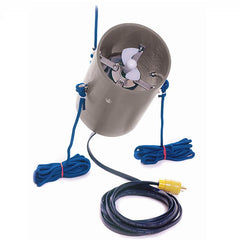
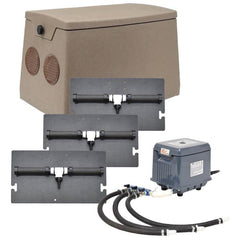
Quick Dock De-Icer Recommendations
Use these fast-start suggestions based on your dock layout. For more details, see the Sizing Guide below.
If you have a single boat lift or small slip:
- Start with: Power House P250 or P500
- Or: Kasco 2400D
- Or: Scott Aerator 1/3 or 1/2 HP
- Or: EasyPro DKSW30 (shallow water)
If you have a long dock or multiple slips:
- Start with: Power House P750 or P1000
- Or: Kasco 3/4–1 HP
- Or: Scott Aerator 3/4 HP
- Or: EasyPro DKSW45 or DKDW60
If you have shallow water or underwater obstructions:
- Increase horsepower and step up from the recommendations in our Sizing Guide.
- You will likely need to mount for horizontal water movement. A dock mount or shallow water mount makes it easiest to achieve.
Protect your Dock, Marina, Pier, and more from Expensive Ice Damage and Time-Consuming Repairs with the Best Dock DeIcer, Dock Bubbler, or Ice Eater

In our experience working with dock owners and marinas, dock de-icers are essential for protecting docks, boats, marinas, seawalls, piers, and lifts from costly winter ice damage. Whether you live on a Northern lake that freezes every year or in a climate with unpredictable cold snaps, using the right dock de-icer can prevent thousands of dollars in repairs and protect your waterfront investment.
All of these options are easy to install, easy to operate, and easy to maintain. Don't risk damage to your assets when they can very easily be protected. We have many years of experience watching lakes freeze and some of the damage we have witnessed has been catastrophic.
This guide covers everything you need to know: how dock de-icers work, how much horsepower you need, how to choose between prop-style and bubbler-style systems, and how today’s major brands compare — including Power House Ice Eater (formerly by Bearon Aquatics, now Airmax), Kasco, Scott Aerator, and EasyPro.
How a Dock De-Icer Works
A dock de-icer prevents ice formation by pulling warmer water from deeper in the lake and circulating it toward the surface. This creates an open-water pocket that:
-
Prevents dock pilings from heaving
-
Keeps boat hulls from freezing in place
-
Reduces pressure on floating docks and lifts
-
Minimizes shoreline ice expansion
-
Protects marina slips from structural damage
Propeller-driven systems work by thrusting warmer water upward at a high flow rate. Bubblers use air diffusers to send bubbles and warmer water up from the lake bottom. Both can be effective — the right choice depends on your dock, water depth, and winter severity.
Bubbler vs Prop-Style De-Icers — Which Is Better?
Prop-Style (Power House, Kasco, Scott)
Pros:
- Larger ice-free opening
- Better for long docks
- Strong water movement
- Adjustable angles
- Great for fluctuating water levels
-
Can be used as a water circulator in summer to reduce stagnation and mosquitoes.
Best For: Marina slips, long piers, heavy freezing
Bubbler-Style (EasyPro, Air Diffuser Systems)
Pros:
- Ultra-efficient
- Quiet operation
- Exceptional for shallow water
- Can be left in the water year-round
- Works for winter de-icing and summer aeration / water quality improvement
-
Gentle on sediment with minimal disturbance.
Best For: Shallow water, tight slips, lift wells, irregular de-icing patterns
Updated Ice Eater Brand History
The Ice Eater name has changed ownership several times over the years, which is why customers often see different brand references online. This brand history is based on long-term retail experience, direct manufacturer communications, and verified acquisition records.
- Originally: Developed and sold as the Power House Ice Eater by The Power House Inc.
- Later: Acquired by Bearon Aquatics, where the products were widely sold under the Bearon Aquatics Ice Eater name.
- Subsequently: The Ice Eater product line became part of Hydrasearch, continuing production and distribution under existing branding.
- 2025: Airmax, Inc. acquired the Power House Ice Eater, Aeration, and Weeds Away brands and restored the original Power House Ice Eater name (Airmax press release).
* This timeline is based on direct manufacturer communications and long-term retail experience selling Ice Eater products through multiple ownership transitions.
Today’s Power House Ice Eaters are manufactured by Airmax with updated motors and improved efficiency while retaining the proven design that made the product line widely trusted for decades.
Winter Dock Preparation Checklist
(What You Must Do Before Freezing Begins)
-
Inspect dock pilings and hardware
-
Remove or secure dock furniture
- Turn off the water supply to the dock
-
Install your de-icer; measure the correct depth
-
Check cords, breakers, and GFCI protection
-
Test the unit before temperatures drop
-
Re-check after the first freeze
-
Use a thermostat control for efficiency
-
Follow the manufacturer’s spacing guidelines
👉 Download the complete checklist (PDF) — perfect for marina resource pages.
Dock De-Icer FAQs
Still deciding? These are the most common dock de-icer sizing and installation questions we hear from dock owners and marinas.
What is a Dock De-Icer?
A dock de-icer is an electric motorized device that circulates warmer bottom water to the surface to prevent ice formation around docks, boat lifts, and marina structures. By keeping warmer water moving, dock de-icers keep ice from forming and melt existing ice.
Are Dock De-Icers Easy to Install?
Most units are very easy to install. Typically, you remove the unit from the box, plug it in, place it in the water, and secure it to a dock cleat or pole. Depending on the model, de-icers are available with hanging, dock-mount, oscillating, or floating mounting options. Most dock de-icers are installed 24 to 36 inches below the water surface.
What is the difference between a dock de-icer and a dock bubbler?
A dock de-icer uses a propeller or agitator to move large volumes of water and create wide ice-free openings. In contrast, a dock bubbler uses compressed air and diffusers to circulate water vertically. De-icers are best for boats, docks, and lifts, while bubblers are ideal for shallow water, long docks, and where energy efficiency and low disturbance are the priority.
How much electricity does a dock de-icer use?
Most dock de-icers use approximately 0.3 to 1.1 kilowatts while running, depending on horsepower and design. Agitator-style de-icers generally use more power than air diffusion systems. Actual energy usage depends on runtime, water temperature, and whether a timer or thermostat is used.
How do I size a dock de-icer for my dock or lift?
Dock de-icer sizing depends on the size of the ice-free opening you need, water depth, winter severity, and wind exposure. Larger openings or harsher conditions usually require higher horsepower or multiple smaller units rather than one oversized de-icer.
How deep should a dock de-icer be installed?
Most dock de-icers are installed 24 to 36 inches below the water surface. Sometimes angling the unit can promote circulation. Running a de-icer vertically in shallow water is not recommended, as it can have limited effectiveness.
Is it safe to run a dock de-icer all winter?
Yes, dock de-icers are designed for continuous winter operation when installed correctly. Open water around a de-icer creates thin ice conditions, so docks should be clearly marked and access restricted during freezing conditions.
Will a dock de-icer harm fish or the lake?
When installed properly, dock de-icers do not harm fish or lake ecosystems. They gently circulate water rather than heating it, helping maintain oxygen exchange without significantly altering natural temperature layers.
When should I use multiple dock de-icers instead of one large unit?
Multiple de-icers are often more effective for long docks, wide marina fronts, or areas with wind exposure. Splitting coverage into zones improves circulation consistency and can reduce strain compared to relying on a single oversized unit.
Is the Power House Ice Eater the same as Bearon Aquatics?
Yes. Over time, the Ice Eater product line has been sold and rebranded by different owners, which is why older references may still appear online. The Ice Eater was originally developed by The Power House Inc., later sold under Bearon Aquatics and Hydrasearch, and in 2025 was acquired by Airmax. Today’s models are sold under the restored Power House Ice Eater name.
What is a Dock De-Icer?
A dock de-icer is an electric motorized device that circulates warmer bottom water to the surface to prevent ice formation around docks, boat lifts, and marina structures. By keeping warmer water moving, dock de-icers keep ice from forming and melt existing ice.
Are Dock De-Icers Easy to Install?
Most units are very easy to install. Typically, you remove the unit from the box, plug it in, place it in the water, and secure it to a dock cleat or pole. Depending on the model, de-icers are available with hanging, dock-mount, oscillating, or floating mounting options. Most dock de-icers are installed 24 to 36 inches below the water surface.
What is the difference between a dock de-icer and a dock bubbler?
A dock de-icer uses a propeller or agitator to move large volumes of water and create wide ice-free openings. In contrast, a dock bubbler uses compressed air and diffusers to circulate water vertically. De-icers are best for boats, docks, and lifts, while bubblers are ideal for shallow water, long docks, and where energy efficiency and low disturbance are the priority.
How much electricity does a dock de-icer use?
Most dock de-icers use approximately 0.3 to 1.1 kilowatts while running, depending on horsepower and design. Agitator-style de-icers generally use more power than air diffusion systems. Actual energy usage depends on runtime, water temperature, and whether a timer or thermostat is used.
How do I size a dock de-icer for my dock or lift?
Dock de-icer sizing depends on the size of the ice-free opening you need, water depth, winter severity, and wind exposure. Larger openings or harsher conditions usually require higher horsepower or multiple smaller units rather than one oversized de-icer.
How deep should a dock de-icer be installed?
Most dock de-icers are installed 24 to 36 inches below the water surface. Sometimes angling the unit can promote circulation. Running a de-icer vertically in shallow water is not recommended, as it can have limited effectiveness.
Is it safe to run a dock de-icer all winter?
Yes, dock de-icers are designed for continuous winter operation when installed correctly. Open water around a de-icer creates thin ice conditions, so docks should be clearly marked and access restricted during freezing conditions.
Will a dock de-icer harm fish or the lake?
When installed properly, dock de-icers do not harm fish or lake ecosystems. They gently circulate water rather than heating it, helping maintain oxygen exchange without significantly altering natural temperature layers.
When should I use multiple dock de-icers instead of one large unit?
Multiple de-icers are often more effective for long docks, wide marina fronts, or areas with wind exposure. Splitting coverage into zones improves circulation consistency and can reduce strain compared to relying on a single oversized unit.
Is the Power House Ice Eater the same as Bearon Aquatics?
Yes. Over time, the Ice Eater product line has been sold and rebranded by different owners, which is why older references may still appear online. The Ice Eater was originally developed by The Power House Inc., later sold under Bearon Aquatics and Hydrasearch, and in 2025 was acquired by Airmax. Today’s models are sold under the restored Power House Ice Eater name.
· Last updated: January 2026 ·
Expert reviewed by Splashy McFun Dock De-Icer Specialists with 10+ years of experience installing Ice Eaters, Kasco, Scott Aerator, and EasyPro systems specialists.
Dock De-Icer Sizing
Through years of real-world use, we’ve found that the single most important factor when selecting a dock de-icer is the size of the ice-free opening required. Environmental conditions, such as water depth, wind exposure, and temperature severity, then refine the horsepower and mounting recommendation.
Step 1 — Choose your target ice-free opening (primary sizing factor)
- Small opening: 20–40 ft radius (typical single lift well / small slip area)
- Medium opening: 40–70 ft radius (typical 1–2 slip areas, moderate exposure)
- Large opening: 70–100+ ft radius (long docks, multi-slip, marina edges)
Step 2 — Apply conditions (why charts vary)
- Colder air temps and wind exposure shrink openings (plan more HP or more units).
- Angled orientation tends to create an oblong opening; vertical orientation tends to create a more circular opening.
- Shallow water and tight lift wells often favor bubblers (more controlled pattern, quieter, very efficient).
Prop-Style De-Icer Sizing (Power House / Kasco / Scott Aerator)
Use this as a practical cross-brand starting point. For Power House, Kasco, and Scott Aerator, horsepower tiers generally track similarly in real-world coverage, so the “HP starting point” column is a reliable first pass. The Oblong vs Circular coverage examples below follow Kasco's published sizing ranges by temperature and orientation, but the Power House and Scott Aerator versions will be similar.
| Target Opening (Primary Goal) | Recommended Prop HP (Starting Point) | Coverage Examples (Oblong vs Circular)* | When to Use Multiple Units |
|---|---|---|---|
|
Small 20–40 ft radius |
Power House: 1/4–1/2 HP Kasco: 1/2 HP Scott: 1/2 HP |
1/2 HP Mild: up to ~30×100 ft (angled) or ~65 ft (vertical) Very cold: ~20×40 ft (angled) or ~30 ft (vertical) |
If you’re protecting multiple lift wells or a long dock face, splitting into 2 smaller zones can outperform 1 larger unit. |
|
Medium 40–70 ft radius |
Power House: 1/2–3/4 HP Kasco: 3/4 HP Scott: 3/4 HP |
3/4 HP Mild: up to ~35×120 ft (angled) or ~85 ft (vertical) Very cold: ~25×50 ft (angled) or ~45 ft (vertical) |
Consider two units if you have wind exposure, a wide marina face, or need consistent openings along a long shoreline edge. |
|
Large 70–100+ ft radius |
Power House: 3/4–1 HP Kasco: 1 HP Scott: 1 HP |
1 HP Mild: up to ~40×150 ft (angled) or ~90 ft (vertical) Very cold: ~30×60 ft (angled) or ~55 ft (vertical) |
For marinas and multi-slip rows, multiple strategically placed units usually create a more reliable protected corridor than a single “maxed” unit. |
* Real-world results can vary based on wind, water movement, depth, and installation.
EasyPro Bubbler Sizing (DKSW / DKDW Systems)
Bubblers are usually sized by dock length to protect and water depth (shallow vs deep). They’re a strong choice for tight slips, lift wells, quieter operation, and high efficiency.
| Water Depth | Dock Length Protected (Typical) | EasyPro Recommended System | Best Use Case |
|---|---|---|---|
| Shallow | Up to ~30 ft | DKSW30 | Small docks, lift wells, controlled patterns |
| Shallow | Up to ~45 ft | DKSW45 | Medium docks, tighter slip footprints |
| Deep | Up to ~60 ft | DKDW60 | Deeper water docks; strong vertical circulation |
| Deep | Up to ~100 ft | DKDW100 | Long docks / larger protected footprints |
Quick Decision Rule
- If you need the largest opening: choose a prop-style de-icer and size by opening goal first.
- If you need controlled protection in a tight area (lift wells/slips/shallow water): choose a bubbler and size by dock length + depth.
- If conditions are harsh (windy, very cold, exposed shoreline): plan for more HP or more units versus trying to “force” one unit to do everything.
Dock De-Icer Sizing Calculator No-JS
Answer these and follow the recommendation that matches you.
1) Prop vs. Bubbler
- Choose Prop / Ice Eater if you need a stronger opening near dock hardware, lifts, or slips.
- Choose Bubbler / Air Diffusion for quieter operation and typically lower power draw.
2) Pick a starting tier
- Typical 1-slip dock: start at 1/2 HP Prop or an appropriately-sized air diffusion kit.
- Wind-exposed / colder patterns: start at 1/2–3/4 HP or increase diffuser coverage.
- Large opening goal: consider 3/4–1 HP or a larger compressor/longer diffuser run.
3) Quantity
- One zone (one slip/lift area) = usually 1 unit.
- Multiple zones / long dock = often 2+ units is better than one oversized unit.
Rule of thumb: Quantity improves consistency; tier improves strength.
Do you need assistance choosing the best dock de-icer system for your situation?
Please click here to send us a message or call us at (888)-897-7527.
Typical Dock De-Icer & Bubbler Energy Details
De-Icer Energy Usage & Power Specs
Manufacturer-available specs summarized by product family/model. Values may vary by voltage configuration and operating conditions.
| Product / System | Power / Voltage | HP | Amps / Wattage (running) | Approx. kW | Notes |
|---|---|---|---|---|---|
| Airmax Power House Ice Eater (Bearon) | 115V / 230V | 1/4 to 1 HP |
P250: 2.5A / 288W P500: 5.0A / 690W P750: 6.3A / 690W P1000: 7.0A / 805W |
0.288–0.805 | Model-dependent; wattage range shown is commonly published for these Ice Eater SKUs. |
| Kasco De-Icers agitator | 120V / 240V (varies) | 1/2, 3/4, 1 HP |
1/2 HP: ~5.7A / ~655W* 3/4 HP: ~6.7A (120V eq) / ~806W* 1 HP: ~9.1A / ~1092W* |
~0.66–~1.09 | *Often derived from published full-load amp specs and standard power assumptions; confirm exact draw by your model/voltage. |
| Scott Aerator De-Icers agitator | 115V / 230V (varies) | Varies | Typical published spec: ~10A / ~680W (115V variant) | ~0.68 | Exact wattage can vary by model (floating vs dock mount; 115V vs 230V). |
| EasyPro Air Diffusion De-Icers air diffuser | 115V (compressor) | N/A | Typical compressor range: ~60–100W* Example: KLC60 ~60W; KLC80 ~80W |
~0.06–~0.10 | *Air diffusion systems generally use far less power than agitator-style de-icers. |
Definitions: kW = watts ÷ 1000. kWh = kW × hours of runtime. Example: 0.8 kW running 24 hours = 19.2 kWh/day.
Typical Energy Use Scenarios
Quick reference for continuous operation (24 hours/day). For timers/thermostats, reduce proportionally to runtime.
| Unit Type (example) | Running Power (kW) | kWh/day (24h) |
|---|---|---|
| Small Ice Eater (example) | 0.30 | 7.2 |
| Mid-size agitator (Scott / Ice Eater example) | 0.70 | 16.8 |
| Large agitator (Kasco 1 HP class) | 1.10 | 26.4 |
| EasyPro Air Diffusion (DKSW30-type) | 0.06 | 1.44 |
| EasyPro Air Diffusion (DKSW45-type) | 0.08 | 1.92 |
If you want, you can add a “Monthly cost” column: kWh/day × 30 × your $/kWh rate.
Typical monthly cost figured based on $0.16/kWh
· Most dock owners run their de-icers on a thermostat or timer, which can cut power usage by 30–60% compared to 24/7 operation ·
Safety Notice: Thin Ice & Open Water
De-icers and dock bubblers intentionally create open water and thin ice. That improves protection for docks and equipment, but it increases risk for people and pets.
Thin Ice Hazard
- Keep all people, pets, and vehicles away from the open-water area.
- Mark the area with signage and/or reflective markers, especially near common access points.
- Never assume ice is safe near a de-icer, bubbler, or current—even if surrounding ice appears solid.
Operational safety
- Use proper GFCI protection and follow manufacturer's electrical guidance.
- Inspect cords/cables for wear before the season and periodically during winter operation.
- Shut down and service equipment if unusual noise/vibration occurs.
This section is informational and does not replace manufacturer instructions or local safety regulations.
· If local rules require signage around open-water areas, we can suggest common best practices we’ve seen marinas use. ·
Why Trust Splashy McFun?
- Over a decade specializing in dock and marina protection equipment
- Hands-on knowledge across prop-style and bubbler-style systems
- Our experts have designed de-icing solutions for marinas across the country.
- Independent retailer — not a manufacturer-biased comparison
- Experience across multiple ownership transitions of the Ice Eater product line
– Brand Comparison Table –
Power House vs Kasco vs Scott Aerator vs EasyPro
| Feature | Power House (Airmax) | Kasco Marine | Scott Aerator | EasyPro (Bubbler) |
|---|---|---|---|---|
| Motor Sizes | 1/4, 1/2, 3/4, 1 HP | 1/2, 3/4, 1 HP | 1/2, 3/4, 1 HP | Variable via compressors |
| Ice Protection Radius | 20–100 ft | 30–90 ft | 30–80 ft | 15–70 ft |
| Style | Prop | Prop | Prop | Bubbler |
| Efficiency | ★★★★☆ ~0.288–0.805 kw/h |
★★★★☆ ~0.66 – 1.03 kw/h |
★★★☆☆ ~ 0.68 - 1.1 kw/h |
★★★★★ |
| Noise Level | Low | Low | Medium | Very Low |
| Best For | Docks & Marinas | Docks & Marinas | Docks & marinas | Shallow water & Long Docks |
| Warranty | 3 years | 2–3 years | 5 years | 1–2 years |
| Mounting Options | Hanging, dock mount | Hanging, dock mount | Hanging, floating, dock | Diffuser tubing |
Ready to choose? Start with the opening size you need, then match it to horsepower or bubbler length using the charts above. If you’re unsure, email us or call us at (888)-897‑7527, and we’ll walk through your dock layout.
View all Dock De-Icers, Ice Eaters, and Dock Bubblers:
All units ship free and are backed by manufacturer warranties plus our easy returns policy.


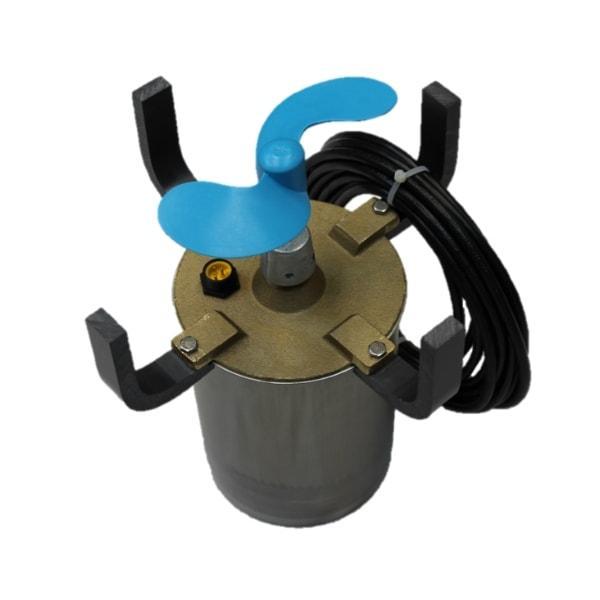
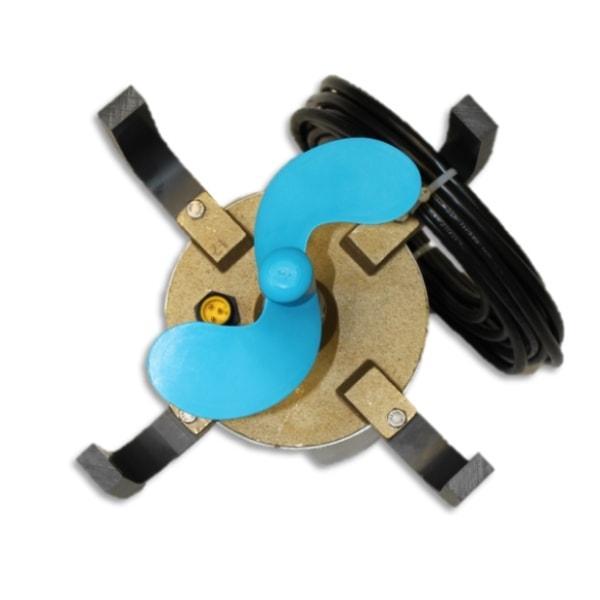


Learn More
-
New to dock de-icers?
-
Complete Guide to Choosing a Dock De-Icer for Boat Owners – overview of types, pros/cons, and cost.
-
(Download PDF) (Infographic) (Brochure)
-
(Download PDF) (Infographic) (Brochure)
-
Complete Guide to Choosing a Dock De-Icer for Boat Owners – overview of types, pros/cons, and cost.
-
Preparing for winter?
- Preparing Your Dock for Winter With a Dock De-Icer – step‑by‑step prep and installation.
-
Comparing brands?
-
The Best Dock De-icers for Boats, Docks, & Marinas – side‑by‑side comparisons and real-world usage tips.
- (Download)
-
The Best Dock De-icers for Boats, Docks, & Marinas – side‑by‑side comparisons and real-world usage tips.
More helpful articles:
-
How Does A Dock De-Icer Protect Your Dock? (Download PDF)
- What to Look for When Buying a Dock De-Icer (Download PDF)
- Download our Information Graphic Here
- Splashy Spotlight: Power House Ice Eater Review (Download)(Infographic) (Brochure)
- Important Reasons to Install Your Dock De-Icer Before Winter Arrives (Download) (Infographic) (Brochure)
- Power House Ice Eaters - Protect Your Boat This Winter (Download)
- How to Use De-icers to Protect Boat Lifts and Docks (Download)
Dock De-Icer Manuals and Documents:
-
Power House Ice Eater: Power House Ice Eater Product Manual - 2025 Edition Power House Ice Eater Manual (2021 version), Power House Ice Eater Buyers Guide, Power House Ice Eater Comparison, Power House Ice Eater Operating Manual, Power House P750 Owners Manual, Power House P500 Owners Manual, Power House Ice Eater Warranty
-
Kasco: Kasco De Icers Buyers Guide, Kasco De Icer Owners Manual, Kasco Information Guide, Kasco De Icer Performance and Size Chart, Kasco De Icer Master CSI Specification Sheet
- Scott Aerator: Scott Aerator Floating De Icer Manual, Scott Aerator Dock Mount Installation Guide, Scott Aerator Slinger Manual, Scott Aerator Warranty
We ❤️ Hearing From Our Happy Customers

Great service and fast shipping! Everything arrived as described and a day early. Thanks for the help with picking out the right inflatable kayak package!
- Kim Y

"Great customer service. I was buying for my husband and wasn't sure of some of the specifics. The Sales Rep (Nate) promptly returned my emails and made sure I got what I was looking for. The Lillipad Boat Diving Board rocks, Thanks!"
- Angie C

"I've now made 3 purchases from Splashy McFun and everything has been easy and arrived on time. The new water trampoline has been a big hit, many thanks guys!"